Working from home sounds like it should make building habits easier. You’re in your own space, you control your environment, and you have more flexibility than most. But flexibility without structure is where habits fall apart. When your home is also your office, it’s easy to skip your morning walk, forget to drink water, or let work bleed into your evening. Not because you don’t care, but because there’s no system keeping you on track.
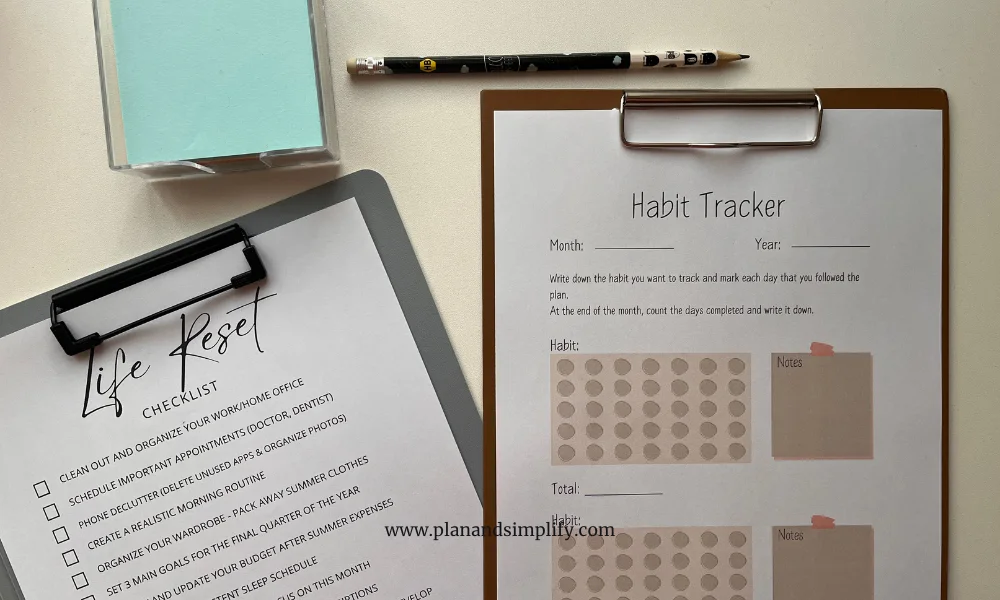
Habit tracker printables are one way to build that system. They work especially well when you already have some structure in your remote work routine, but starting with habit tracking is a solid first step on its own.
Habits are harder to build when you work from home
In an office, your environment creates structure. You arrive at a set time, coworkers are around, and lunch happens at a predictable hour. These cues trigger habits without you thinking about it.
At home, you have to create those cues yourself. A free habit tracker template is one of the simplest ways to start building those cues on purpose.
You set your own structure from scratch
There’s no commute to signal the start of your workday. No office kitchen to remind you to drink water. No natural end of day moment when everyone packs up and leaves. Even if your company sets your working hours, the physical cues that support your habits simply aren’t there. A habit tracking template helps you create those cues on purpose.
Work and personal habits share the same day
When your home is also your office, everything happens in the same rooms and the same hours. A workout, a proper lunch break, time to decompress. They all need to fit into a day that also has meetings, deadlines, and tasks. Without a free daily habit tracker to show you what you’re doing, it’s easy to assume you’re keeping up when the data would tell a different story.
When you work from home, it’s tempting to track everything at once. Sleep, water, exercise, screen time, and work start time. But a habit tracker printable works best when you keep it focused, especially at the beginning.
A good starting point is to look at your workday and find the one thing that, if you did it consistently, would make everything else a little easier. For a lot of remote workers, that’s a consistent start time, because it anchors the rest of the day. For others it’s a proper lunch break, because skipping it affects focus and energy for the entire afternoon.
Ask yourself what your worst WFH days have in common. That pattern usually points directly to the habit worth tracking first. Once that one feels automatic, [organizing the rest of your workday] gets a lot easier.
How to use your habit tracker as a remote worker
There are a lot of habit tracker printables out there, but having the right one is only half of it. How you use it today determines whether it becomes part of your routine or ends up forgotten in a drawer. These three things make the biggest difference.
Which habits to track first
When you work from home, it’s tempting to track everything at once. Sleep, water, exercise, screen time, and work start time. But a habit tracker printable works best when you keep it focused, especially at the beginning.
A good starting point is to look at your workday and find the one thing that, if you did it consistently, would make everything else a little easier. For a lot of remote workers, that’s a consistent start time, because it anchors the rest of the day. For others it’s a proper lunch break, because skipping it affects focus and energy for the entire afternoon.
Ask yourself what your worst WFH days have in common. That pattern usually points directly to the habit worth tracking first. Once that one feels automatic, organizing the rest of your workday gets a lot easier.
When to fill it in during your workday
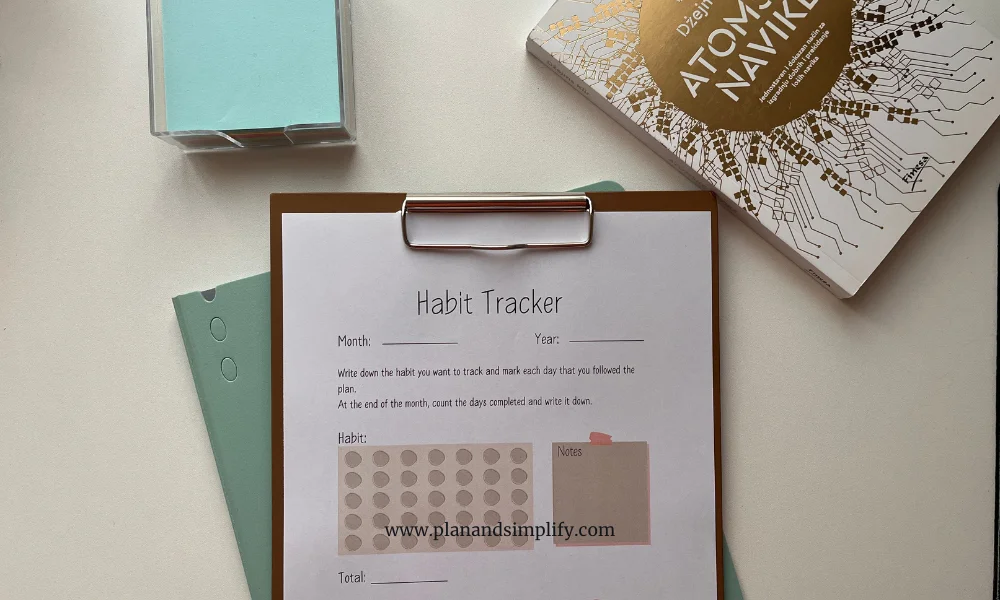
The easiest way to remember is to attach it to something you already do. Fill it in while your morning coffee brews. Check it when you sit down at your desk. Look at it during your lunch break. When tracking connects to an existing moment in your day, it stops feeling like an extra task.
A structured weekly plan makes this even easier because you already have predictable anchor points built into your week.
Reading your patterns over time
Your habit tracking template is collecting data every time you fill it in. At the end of each week, scan your marks and notice where the gaps are. Are Mondays always blank? Do you do well mid week but fall off by Friday? That tells you where your WFH routine needs more support.
This is where mood tracking becomes especially useful. If your harder days cluster around the same point each week, you can start connecting how you feel to how your habits are holding up.
What makes habit tracking stick when you work from home
Consistency matters more than perfection. A 30 day habit tracker printable with a few missed days still gives you useful information. A tracker you abandoned after one week gives you nothing.
A few things that help:
Keep your tracker somewhere visible. On your desk, on the wall near your workspace, somewhere you’ll see it during your workday. If it’s in a drawer, you won’t use it.
Be specific about what counts. “Exercise” is vague. “Walk for 20 minutes before 9am” is trackable. The clearer your habit, the easier it is to fill in your monthly habit tracker.
Don’t restart from day one every time you miss a day. Missing once is fine. Missing twice is a signal to adjust your routine, not to give up on tracking altogether.
FAQ
I’ve included a FAQ section to address common questions about using these trackers effectively:
Start with habits that support your workday structure. A consistent start time, a proper lunch break away from your desk, and a clear end of day signal work well for most remote workers. These create the structure that an office would normally provide without you having to think about it.
One or two for the first month. Building the habit of tracking itself takes time. Once filling in your habit tracker printable feels automatic, you can add more.
Attach your tracking to something fixed in your day rather than a specific time. If you always make coffee before starting work, fill in your monthly habit tracker printable then. That anchor stays the same even when your schedule shifts.
Mark what happened and keep going. Gaps in your free monthly habit tracker are not failures, they are information. Look at when they happen and use that to adjust your routine.